5 steps to refinancing your home loan
Introduction
Your home loan seemed like a great fit when you first got it. But now it might not be working in your favor. Interest rates have changed, better deals are available, and your financial situation isn’t the same as before. Sticking with the wrong loan could mean paying more than necessary.
Refinancing can reduce monthly payments, secure lower interest rates, and offer more flexibility. Many homeowners hesitate, thinking the process is too complicated or time-consuming. In reality, it’s straightforward when you know what to do.
In this blog, discover five simple steps to refinancing your home loan and securing a better financial future.
Key takeaways
- Refinancing replaces your loan by switching lenders or renegotiating better terms.
- Assess financial health by checking your credit score, home equity, and Loan-to-Value Ratio (LVR).
- Compare loan options based on interest rates, fees, and features to find the best deal.
- Organising necessary documents in advance, such as proof of income, identification, and loan statements.
What is mortgage refinancing?
Refinancing a mortgage means replacing an existing home loan with a new one. Also known as remortgaging or a buy-out mortgage, this process allows borrowers to switch to a different lender, who takes over the loan from the previous lender, or renegotiate terms with their current lender.
The borrower then continues making monthly payments under the new loan agreement, which includes updated interest rates, terms, and conditions. Instead of financing a property purchase, the new mortgage is solely used to settle the outstanding balance of the previous loan.
Top 5 reasons to refinance your home loan
Homeowners refinance their mortgage for various reasons:

How to refinance a home loan?
Refinancing a mortgage in Australia involves several steps to ensure a smooth transition from your current loan to a new one. Here’s how the process works:
-
Step 1: Understand your financial position
Before refinancing, assess your current financial situation to determine if refinancing is right for you. Lenders will evaluate your financial health, so it’s essential to be prepared.
-
Check your credit score:
Lenders use credit scores to determine loan eligibility and interest rates. A higher score (above 700) can help secure better terms, while a low score (below 600) may limit your options.
- You can access your credit score for free through major credit bureaus like Equifax, Experian and Illion.
- If your credit score is low, improve it by paying off debts and making timely payments before applying.
-
Evaluate your home equity:
Home equity is the portion of your property you own, calculated as the difference between your home's market value and the remaining loan balance.
It plays a significant role in refinancing, as most lenders require at least 20% equity to approve a refinance without charging Lenders Mortgage Insurance (LMI).
The more equity you have, the better your chances of securing lower interest rates and more favorable loan terms. To calculate your home equity, use the formula:
(Home Value - Loan Balance) ÷ Home Value × 100 = Equity Percentage
For example:
If your home is valued at $500,000 and your outstanding loan balance is $350,000, your home equity would be 30%. Having a higher equity percentage gives you more negotiating power with lenders and may help you avoid additional refinancing costs.
-
Loan-to-Value Ratio (LVR):
(Loan Balance ÷ Home Value) × 100 = LVR
If your LVR exceeds 80%, you may be required to pay LMI, which adds to your overall refinancing expenses.
For example:
If your current loan balance is $400,000 and your home is worth $500,000, your LVR would be 80%, which is the maximum threshold before LMI applies.
-
Lowering your LVR by increasing home equity or reducing your outstanding loan balance can help you qualify for a better refinancing deal with reduced costs.
-
-
Step 2: Compare home loan options
Once you have assessed your financial situation, the next step is to explore loan options. Refinancing isn’t just about securing a lower interest rate, it’s about finding a loan that aligns with your financial goals.
First, define your reason for refinancing. Are you looking for lower repayments, greater flexibility, or predictable fixed payments? Based on your goal, you can choose:
- Variable-rate loans: Offer flexibility with extra repayments, offset accounts, and potential savings if rates drop.
- Fixed-rate loans: Provide stability with locked-in repayments for a set period.
- Split loans: Combine both, giving partial flexibility while maintaining some stability.
Interest rates play an important role in refinancing. Check both:
- Advertised rate: The base interest rate offered by lenders.
- Comparison rate: A more accurate cost estimate, including fees.
Consider additional costs before refinancing, such as:
- Discharge fees: Charged for leaving your current loan.
- Application fees: Setup costs for the new loan.
- Break costs: Fees for exiting a fixed-rate loan early.
Beyond rates and fees, look at features that can save you money in the long run:
- Offset account: Lowers interest by linking a transaction account to your loan.
- Redraw facility: Let's you withdraw extra repayments if needed.
- Flexible repayments: Allows changes to repayment frequency or temporary pauses.
-
Step 3: Choose the right lender
Once you’ve compared loan options, the next step is selecting the right lender. Lenders vary in interest rates, loan features, processing times, and eligibility criteria, so choosing the right one can lead to lower costs, better flexibility, and additional financial benefits. Evaluating them carefully ensures you secure the best refinancing deal tailored to your needs.
Factors to Consider When Selecting a Lender:
- Interest rates & fees: Some lenders offer lower rates but have high fees, while others provide competitive rates with minimal costs. Comparing both helps determine actual savings.
- Loan processing time: Some lenders approve loans within days, while others take weeks. If timing is important, choose a lender known for quick processing.
- Customer support & service: A lender with responsive service can make refinancing smoother, especially if you need assistance during the process.
- Eligibility requirements: Lenders have different criteria for income, employment type, and credit history. Applying to lenders that match your profile improves approval chances.
- Exclusive offers & perks: Some lenders provide cashback deals, loyalty discounts, or special refinancing incentives that add value beyond just a lower rate.
With so many factors to consider, expert guidance can simplify the process.
At ZedPlus, we compare 40+ lenders and over 1000 loan options to help you secure the most competitive refinancing deal. Instead of navigating the complexities alone, we streamline everything, ensuring you get the best lender with minimal effort.
-
Step 4: Apply for your new loan
Your research for the best home loan option and lenders has hopefully led you to the right choice. Now, it’s time to move forward with your application. A well-prepared submission helps speed up the approval process and makes the transition to your new loan hassle-free.
Lenders require specific documents to assess eligibility, so organising everything helps prevent unnecessary delays. To get started, you’ll need to provide important details, including:
-
Mortgage Refinance Requirements:
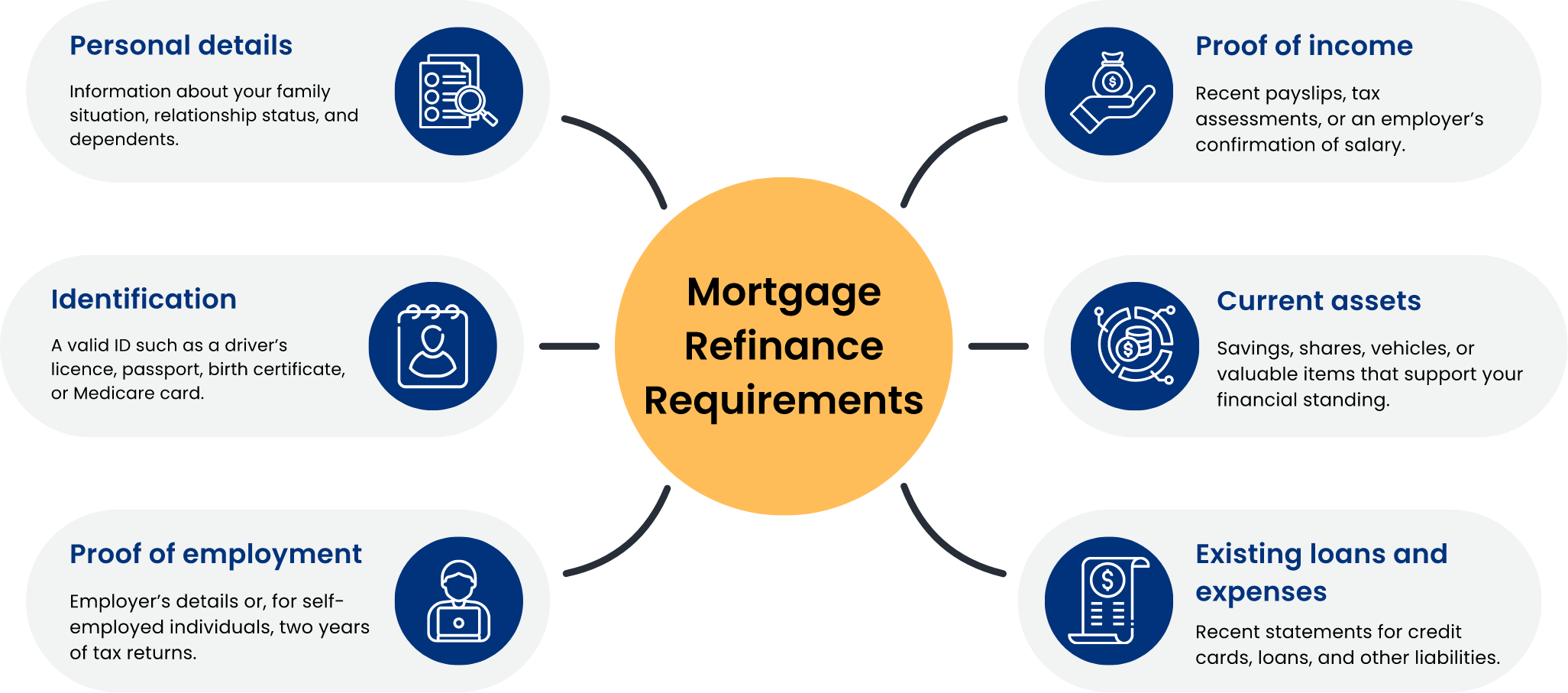
With ZedPlus, refinancing your home loan is quick and hassle-free. Our fully online application process removes the need for paperwork and in-person visits, making the experience more convenient. A dedicated Home Loan Specialist will guide you through every step, handling the complexities on your behalf.
From submitting your application to securing the best terms with lenders, they ensure a smooth and stress-free process. While we take care of the details, you stay informed and in control at every stage.
-
-
Step 5: Loan approval & settlement
Once your refinancing home loan application is approved, the lender will issue formal approval and provide the necessary loan documents. These typically include your loan agreement, mortgage contract, and other important paperwork.
Carefully review all terms, conditions, interest rates, fees, and repayment details. If anything is unclear, ask your lender for clarification before signing.
After signing, the new lender will handle the settlement process, which involves paying off your existing loan, transferring your mortgage, and setting up your new repayment structure.
While most lenders aim for a smooth transition, delays from your old lender may affect the final settlement date.
Staying informed and maintaining communication throughout the refinancing home loan approval process can help avoid unexpected delays and ensure a seamless transition.
Once settlement is complete, you will receive a welcome kit from your new lender, outlining your final loan terms, repayment schedule, and any features included in your loan package. Verify that all details match what was agreed upon, then set up your accounts and repayment schedule to ensure timely payments.


Final words
Refinancing your home loan is more than just replacing one loan with another. It’s about making a decision that supports your financial goals and puts you in a stronger position for the future.
The five steps discussed in this blog will help you secure a loan that better fits your needs. From choosing the right type of loan to researching lenders and preparing your documents, each step ensures you make a well-informed decision. If you are ready to explore your options, connect with our lending specialists at ZedPlus for expert guidance.