

SMSF residential property in 2026: Everything you need to know about the new borrowing rules
Buying residential property through a Self-Managed Super Fund (SMSF) has long been a popular way for Australians to build retirement wealth. However, major legislative changes in 2026 have altered the rules for property borrowing inside super.
If you are planning to buy an investment property using an SMSF loan, or already hold one, understanding these changes is critical. A firm deadline of 10 August 2026 is now in place, and the ATO released official guidance on 28 July 2026 confirming exactly how the new rules and transitional protections operate. Here is a breakdown of how SMSF residential property investing works, what the 2026 rule changes mean, and the steps you need to take right now.
Here is a breakdown of how SMSF residential property investing works, what the 2026 rule changes mean, and the steps you need to take right now.
Key takeaways
- New residential SMSF borrowing arrangements close after 10 August 2026.
- Existing SMSF residential property loans remain protected under grandfathering provisions.
- Commercial property borrowing through an LRBA is still permitted.
- Refinancing existing residential LRBAs is explicitly confirmed as permitted by the ATO, and grandfathered status is not lost by refinancing.
- Trustees must meet strict ATO and SIS Act requirements when investing through an SMSF.
- Proper loan structuring before signing contracts is critical.
What is SMSF residential property investing?
SMSF residential property investing is when a Self-Managed Super Fund (SMSF) purchases a house, townhouse, apartment, or unit as a long-term investment to help grow members' retirement savings.
Instead of buying the property in your personal name, the SMSF owns the asset and receives any rental income and future capital growth, subject to Australia's superannuation rules. This strategy has become increasingly popular as more Australians seek greater control over how their retirement savings are invested.
According to the latest Australian Taxation Office data, there are 672,805 Self-Managed Super Funds (SMSFs) in Australia, collectively managing an estimated $1.06 trillion in assets, highlighting the significant role SMSFs now play in Australia's retirement system.
While investing in residential property through an SMSF can offer tax advantages and long-term wealth creation, trustees must comply with strict legislative requirements, including:
- The property must satisfy the Sole Purpose Test by being held solely to provide retirement benefits.
- Members or their relatives cannot live in or rent the property.
- Residential property generally cannot be purchased from a related party.
- Any lease must be on arm's length terms with market rent.
Understanding these rules is essential before considering an SMSF property loan or residential property investment through your super.
How SMSF property loans work?
Unlike traditional home loans, an SMSF cannot simply borrow money directly from a bank to purchase residential property. Australian superannuation law only permits borrowing through a specialised structure known as a Limited Recourse Borrowing Arrangement (LRBA).
What is a limited recourse borrowing arrangement?
Under an LRBA, the super fund borrows money to buy a single asset (like a residential house). That asset is held in a separate legal structure called a Bare Trust (or Custodian Trust) until the loan is fully paid off. If the fund ever defaults on the loan, the lender can only repossess that specific property. They cannot touch any other assets held inside your super fund.
Why do trustees choose an SMSF property loan?
LRBAs allow trustees to purchase property sooner without waiting to build up 100% of the purchase price in cash. Rental income helps pay down the mortgage, and capital growth builds inside the low-tax super environment (15% on rental income, and as low as 10% on capital gains if held over 12 months).
Steps to buy an SMSF residential property
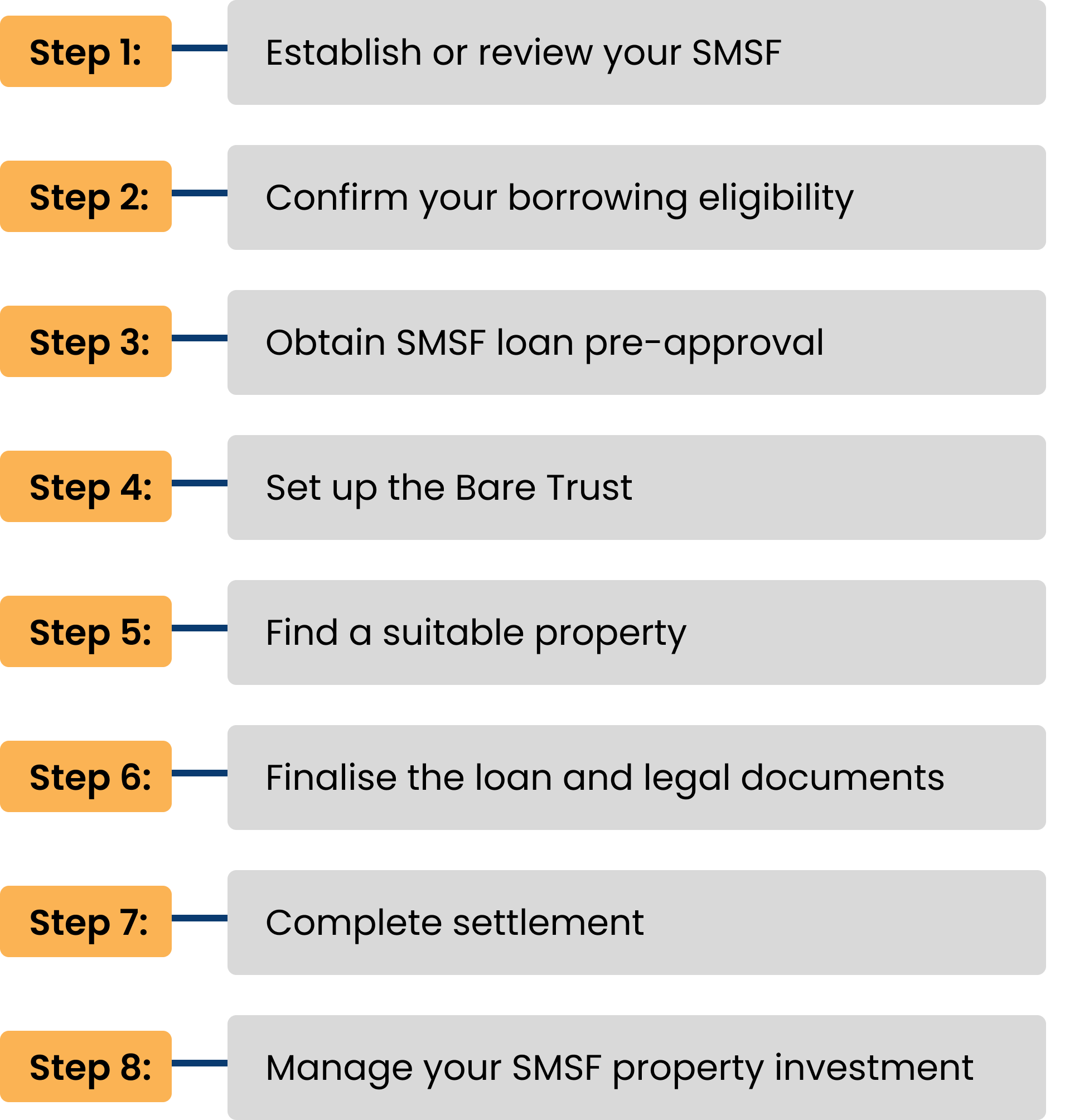
Buying residential property through an SMSF follows a structured process. Here's how an SMSF property purchase typically works from setup to settlement.
The 2026 legislative changes to SMSF residential property borrowing
This is where the SMSF residential property landscape has changed substantially in 2026, and every trustee considering an SMSF home loan needs to understand it.
The ban on new residential LRBAs
On 23 June 2026, the government agreed with the Greens to restrict SMSF borrowing for residential property, as part of the Treasury Laws Amendment (Tax Reform No. 1) Bill 2026. The bill passed both houses of Parliament on 25 June 2026 and received Royal Assent on 26 June 2026.
The legal mechanism is a new paragraph 67A(2)(c) inserted into the Superannuation Industry (Supervision) Act 1993. It adds one new condition to the existing LRBA rules: where the asset being acquired is real property, it must be business real property within the meaning of section 66 of the Act.
Residential property does not meet this definition, so from the commencement date, it is effectively excluded from new SMSF borrowing arrangements. The rest of the LRBA framework is unchanged, and LRBAs are not banned outright.
Importantly, this restriction applies regardless of who the lender is. The ATO has now officially confirmed that the identity of the lender, whether a bank, non-bank lender or related party, does not determine the nature of a property or affect how the ban applies.
What is "business real property"?
Business real property generally means land and buildings used wholly and exclusively in one or more businesses, for example, an office, factory, warehouse, or the premises from which your own business operates.
There is one specific carve-out for primary production. A property used in a primary production business that also contains a dwelling can still qualify as business real property, provided:
- The dwelling used for private or domestic purposes sits on no more than 2 hectares of land, and
- The main use of the whole property is not for domestic or private purposes.
Ordinary residential property, including a normal family home or standard investment house, does not meet this test.
The property must stay business real property for the life of the loan
This is a compliance point that is easy to miss.
It is not enough for the property to qualify as business real property when you first take out the loan. The ATO requires the property to remain exclusively dedicated to business use for as long as the loan is active.
If the property stops being used for business (for instance, if you stop using or leasing it commercially), the super fund breaks the loan rules, which can trigger penalties from the tax office. However, simply looking for a new commercial tenant between leases will not automatically cause you to lose your qualified status.
The deadline: 10 August 2026
The cut-off: You must exchange contracts and have the Bare Trust established before 10 August 2026.
Contracts vs. settlement: The trigger point is when contracts and borrowing structures are formally signed, not when the loan settles. If your contracts and Bare Trust are properly executed before 10 August 2026, the deal is protected even if settlement happens later. This is now explicitly confirmed by the ATO in guidance released 28 July 2026, including for off-the-plan purchases.
A caution on later variations: The ATO has confirmed that in general, minor changes to a contract exchanged before 10 August 2026 will not affect protection. However, if the contract is changed significantly and the fundamental terms no longer exist, the ATO may treat this as a new arrangement entered into after commencement, meaning protection could be lost.
Avoid substantial renegotiation of contract terms once exchanged.
Time is running out to secure your SMSF property loan

Book a call now
What happens to existing SMSF residential property loans?
If your SMSF already holds a residential property under an LRBA established before 10 August 2026, you do not need to panic or sell the property.
Your arrangement is protected by what the government calls "grandfathering provisions." This simply means the new law only stops new residential borrowing from 10 August 2026 onwards; it does not apply backward to loans already in place. Your existing property and mortgage can continue right through to the end of the loan term as originally planned.
What can you do with an existing SMSF residential property loan?
If your fund already holds a residential property loan, you retain full flexibility to manage and maintain your setup under the following permissions:
- Keep the loan active: You can continue making your regular monthly mortgage repayments using rental income and super contributions, exactly as you do today.
- Refinance for a better deal: The ATO has now officially confirmed (28 July 2026) that refinancing an existing residential LRBA is fully permitted and does not affect your grandfathered status, even if you switch to a new lender. The refinanced loan amount should not exceed the original outstanding balance plus direct refinancing costs.
- Maintain tax benefits: Retain the concessional 15% tax rate on net rental income and an effective 10% capital gains tax rate if the asset is held for over 12 months (or 0% in pension phase).
What you cannot do (strict ATO limits)?
To keep your existing loan fully compliant, the Australian Taxation Office (ATO) enforces strict boundaries. Here is what you are legally prohibited from doing with a grandfathered residential LRBA:
- NO cash-outs or equity release: You cannot increase your loan amount or rely on accessing home equity loans to extract cash from the property, even if its market value has gone up significantly. A refinanced loan can only cover the remaining debt balance plus essential, direct refinancing fees.
- NO swapping or moving the property: The loan is legally tied to the exact property originally bought in your Bare Trust. You cannot sell the property and transfer the existing loan over to a new residential home or unit.
- NO subdividing or changing the legal title: You cannot split the property's land title into multiple lots (for example, subdividing one block into two) or convert a single title into strata titles while the loan is active, as the ATO considers this creating new assets.
- NO changing the property's main purpose: You cannot fundamentally alter the character of the asset under the loan, such as turning a residential house into a commercial restaurant, medical clinic, or office space.
- NO borrowing extra money to renovate: You cannot increase your loan or borrow additional funds to build extensions, add a granny flat, or make structural upgrades. Any renovations, repairs, or updates must be funded entirely using cash already sitting inside your super fund.
Your guide to smarter SMSF property decisions
Want to explore SMSF property investing in more detail? Our ebook "Mastering SMSF Property Investing" covers borrowing, compliance, investment strategies, and common mistakes to help you make informed decisions.
Residential vs commercial SMSF borrowing after 10 August 2026
The table below highlights the key differences between residential and commercial SMSF borrowing after the new rules take effect.
| Residential vs commercial SMSF borrowing | ||
|---|---|---|
| Features | Residential property | Commercial property |
| New LRBA available | No | Yes |
| Existing LRBAs protected | Yes | Yes |
| Refinance existing loan | Yes | Yes |
| Purchase with cash | Yes | Yes |
| Purchase through new borrowing | No | Yes |
For many trustees, commercial property may become the preferred borrowing option after the deadline, particularly for business owners looking to purchase their own business premises through superannuation. Note that "commercial" alone is not the legal test; the specific property must meet the section 66 business real property definition, and must keep meeting it for the life of the loan.
What SMSF borrowing options still work after the deadline?
Missing the 10 August 2026 deadline doesn't mean you can no longer invest in residential property through your SMSF. It simply means new residential borrowing arrangements won't be available. Trustees still have several investment options depending on their financial position and long-term retirement strategy.
- Buy outright with cash: An SMSF with enough cash flow can still purchase residential property 100% outright without a loan.
- Tenants-in-common (Co-Ownership): Your SMSF can buy a partial share (e.g., 50%) of a residential property using cash, while another partner or entity buys the remaining portion. The SMSF must fund its share entirely with cash, as borrowing is not permitted. Important: under this structure, the SMSF cannot later acquire any further shares of the property.
- Ungeared unit trusts: Multiple funds or parties can pool cash into an unlisted trust to purchase residential property, provided the trust has zero debt.
- Pivot to business real property: LRBAs remain fully available for commercial property, industrial warehouses, and medical suites used for business.
How do these changes affect existing SMSF property loans and new investors?
If your SMSF already holds a residential property under an LRBA, your existing loan is not affected. You can continue making repayments and, in most cases, refinance on normal commercial terms.
If you are a new investor hoping to get into residential property through super, the window is narrow. Establishing an SMSF, arranging finance pre-approval, and exchanging contracts all need to happen before 10 August 2026 to fall under the current rules.
This is where working with an experienced SMSF lending specialist matters. At ZedPlus, we help trustees move efficiently through SMSF borrowing, from lender selection through to loan structuring, so that time-sensitive transactions have the best chance of being completed within the transitional window.
Explore our other helpful reads



Benefits and risks of SMSF residential property investment
Like any geared investment, buying residential property through an SMSF comes with upside and downsides that need to be weighed against your fund's overall strategy. The table below summarises the main factors trustees should consider.
| Benefits and risks of SMSF residential property investment | ||
|---|---|---|
| Factor | Potential benefit | Potential risk |
| Tax treatment | Concessional tax rate on rent (15%) and capital gains (10%). | Contribution caps limit how much can be added to fund borrowing costs. |
| Asset protection | LRBA structure limits lender recourse to the property. | Property is illiquid, which can strain the fund's cash flow. |
| Retirement savings | Long-term capital growth compounds inside super. | Limited borrowing options after 10 August 2026 for residential assets. |
| Diversification | Property can balance shares and other fund assets. | Concentration risk if one property makes up most of your super. |
SMSF property loan checklist before 10 August 2026
If you are planning to purchase residential property before the borrowing rules change, completing these steps early can help avoid delays.
- Confirm your SMSF trust deed allows property investment.
- Review your investment strategy.
- Speak with an SMSF lending specialist.
- Obtain finance pre-approval.
- Establish the Bare Trust before signing contracts, not just before settlement.
- Engage your solicitor and accountant early.
- Ensure all legal documentation is completed before the deadline.
Planning ahead gives you more time to address lender requirements and avoid unnecessary complications.
How ZedPlus can help?
With the 10 August deadline fast approaching, securing an SMSF loan requires speed, precision, and flawless compliance. Navigating Bare Trusts, tight lender timelines, and ATO rules leaves zero room for error; a single setup mistake can derail your purchase entirely.
At ZedPlus, our lending specialists can assist with:
- Getting your pre-approval locked in and your loan structured correctly before time runs out
- Establishing the required SMSF borrowing framework and Bare Trust setup
- Coordinating directly with your accountant, solicitor, and lender
- Reviewing legal documentation to prepare a fully compliant finance application
- Managing the entire loan process through to formal approval and settlement
If you have been considering purchasing residential property through your SMSF, now is a good time to review your plans and understand how these legislative changes may affect you. If you would like to discuss your circumstances or determine whether this strategy remains suitable before the deadline, please speak to our lending team.
SMSF residential property FAQs
1. Can my SMSF still buy off-the-plan residential property?
Only if the off-the-plan contract and borrowing structure are fully signed and legally binding before 10 August 2026. New off-the-plan residential contracts entered into after this date cannot use an SMSF loan.
2. What name should be listed as the buyer on the property purchase contract?
The purchase contract must list the Bare Trust Corporate Trustee Company as the purchaser (e.g., Smith Holdings Pty Ltd as Trustee for the Smith Property Bare Trust). Putting the SMSF name or individual member names on the purchase contract is a critical legal error that can trigger double stamp duty or void the loan arrangement.
3. Can I use my personal cash or home equity to fund the deposit for my SMSF property?
Not directly. You cannot pay for the SMSF property deposit or fees out of your personal bank account. Any funds used for the deposit must either already be inside your SMSF or contributed into the fund via standard concessional/non-concessional super contribution limits before paying the vendor.
4. Can an SMSF buy a residential property directly from a fund member if paying cash?
No. Under Section 66 of the SIS Act, an SMSF is strictly prohibited from acquiring residential property from a "related party" (which includes members, relatives, or associated entities) even if the fund buys it with 100% cash at full market value. This restriction only relaxes for commercial property or business real property.
5. Does the 2026 ban affect home construction contracts using an SMSF loan?
Yes. If your SMSF purchased land under an LRBA prior to the deadline but has not yet executed a separate building/construction contract under a valid borrowing structure before 10 August 2026, new borrowing cannot be drawn down to fund the build. Construction costs in that situation must be paid using ungeared cash reserves sitting within the super fund.
Final thoughts
The 2026 changes are a major shift, but they don't shut the door on SMSF property investing. New residential LRBAs end on 10 August 2026, yet existing loans stay protected, including for refinancing, cash purchases and co-ownership remain options, and commercial property is still fully available under an LRBA, provided it meets, and continues to meet, the business real property test.
If you are racing to beat the deadline, time is tight, so getting your Bare Trust and loan structured correctly now matters. Book a call with our SMSF lending specialists to understand your best path forward.
Disclaimer
The information provided in this blog is for general informational purposes only and does not constitute financial, legal, tax, or credit advice. Superannuation and lending laws, eligibility criteria, and ATO guidance may change over time. Before making any financial decisions, consider seeking personalised advice from a qualified mortgage broker, accountant, or financial adviser based on your individual circumstances.